
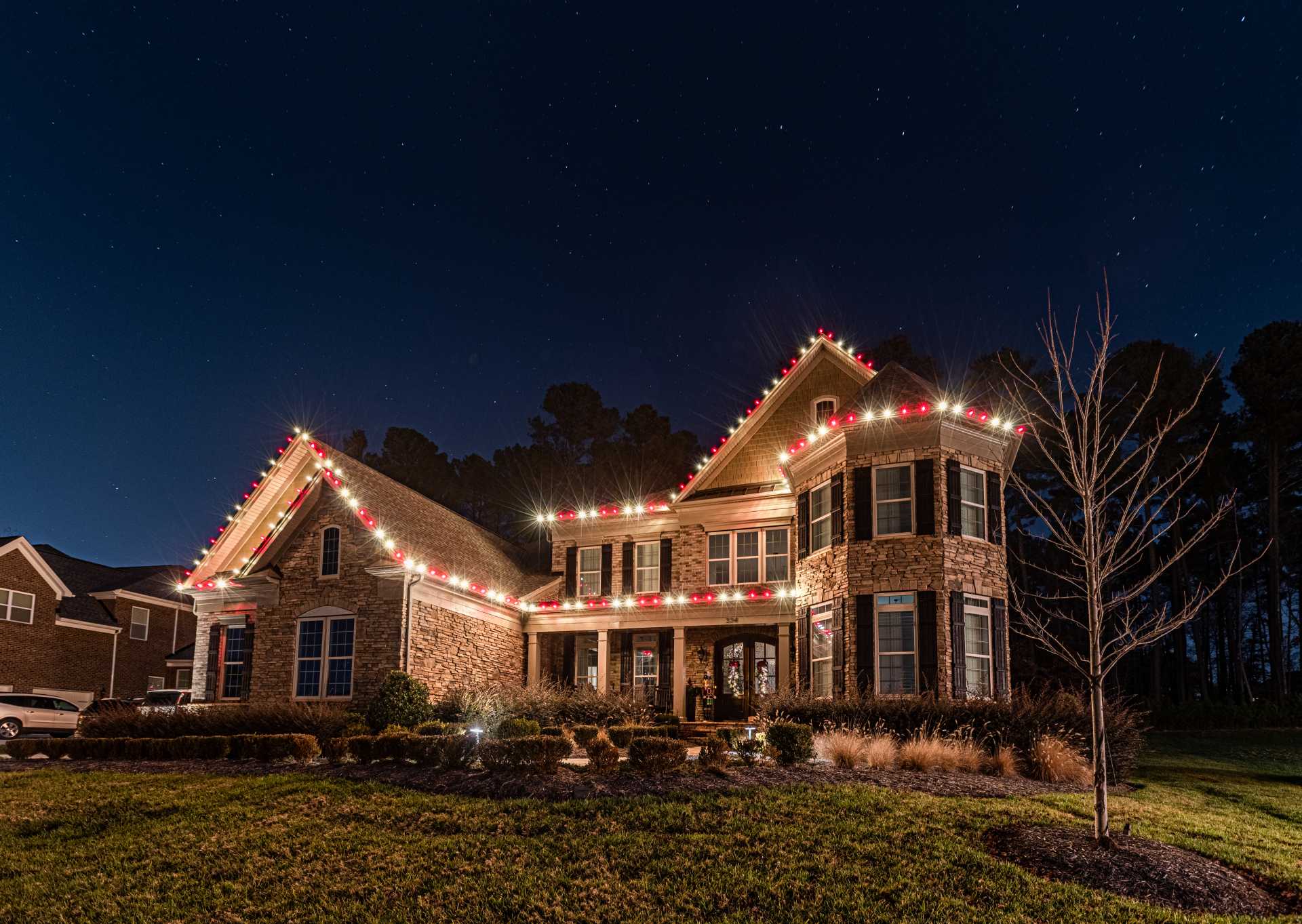
Make informed design decisions before installation with a clear brief, layout priorities, color choices, and a realistic seasonal service plan.
These planning details explain how to choose a practical concept before requesting a property-specific estimate. Availability, access, materials, and seasonal service terms are confirmed for each project; they are not assumed from the service name.
Begin with goals instead of a list of products
Good holiday lighting design starts with questions about the experience you want. Should the property feel traditional and understated, brightly festive, elegant at the entrance, or welcoming to visitors from the street? The desired atmosphere gives the designer a basis for deciding what to illuminate and what to leave unlit. Beginning with a bulb count or generic package often overlooks the details that distinguish one property from another.
A brief should describe the property type, primary viewers, preferred colors, areas you want included, and any features that must remain clear. For a residence, the main goal might be evening curb appeal. For a business, visitor arrival, access and brand fit may be more important. You can explore examples in the project gallery while treating reference photographs as inspiration rather than verified client case studies.
- Select the mood: classic, colorful, subtle, or high-visibility.
- Identify focal features and any areas that should remain dark.
- List practical constraints such as access, landscaping, and power.
Site survey: architecture, landscape, and viewing distance
The visible geometry of a property determines which patterns will work. Rooflines and gables establish lines; columns and entry arches add vertical balance; and trees or shrubs can create foreground depth. Viewing distance changes how much detail will be noticeable. Small features may disappear from the street, while an overly dense arrangement can dominate a compact yard.
Consider photographs from the road, front walk, and driveway to understand visual hierarchy. The survey should also identify surfaces that may be unsuitable for attachment, difficult roof access, and areas where a cable route might conflict with ordinary movement. Visit roofline planning and outdoor layout ideas for practical examples of design tradeoffs.
- Map primary and secondary viewing angles.
- Mark architectural edges, landscape features, and entrances.
- Assess feasibility before locking in visual details.
Choose a palette that remains coherent
Color is one of the fastest ways to change the character of a display. Warm white can emphasize classic forms and greenery; cool white can appear crisp; and carefully planned color combinations can produce a playful seasonal effect. The best palette depends on the exterior finish, ambient street lighting, and the look the owner wants. Consistency between adjacent areas generally matters more than the number of colors used.
Bulb size, spacing, brightness, and the proportion of dark space also affect perceived color. A bright roofline paired with very dense tree wrapping may need adjusting to restore balance. Consider whether a wreath, garland, or pathway detail should match the main palette or act as a subtle accent. The decorative accent guide addresses those finishing details.
- Keep the principal roofline color consistent unless variation is deliberate.
- Use contrast sparingly to highlight important features.
- Review the design from the intended nighttime viewing distance.
Match the concept to the scope and season
The design stage should connect the desired visual effect to practical installation conditions. A tall ridge, mature tree, or complicated façade may require a simpler pattern or different equipment. Discuss installation timing, access windows, material choices, power routing, maintenance, and removal before treating the concept as final. Scope clarity protects both the visual result and the expectations for seasonal service.
Compare the difference between essential features and optional additions. For example, the main roofline may be the essential component, while a lighted tree or garland is an upgrade if the budget allows. The pricing guide discusses common cost factors; actual figures need a property-specific estimate.
- Separate must-have coverage from optional details.
- Review access feasibility before scheduling.
- Document installation, maintenance and removal responsibilities.
Turn the design brief into a quote request
A useful request includes the property address, wide daylight photos, your preferred look, the areas to illuminate, and timing. Add reference images with notes about the particular design elements you like. Include information about gated access, operating hours, landscaping, or recent exterior changes if relevant. These details help a reviewer distinguish the intended concept from an unpriced inspiration photo.
For homes, continue to residential services; for managed properties, review commercial services. When the concept is ready, send the materials through the quote form and confirm address-based availability.
- Provide a short statement of the desired holiday atmosphere.
- Attach property photos and mark priority features.
- Request written confirmation of scope, timing, and seasonal services.
Common Questions About Holiday Lighting Design
Is design part of the installation process?
The website describes custom design planning as part of its installation workflow; specific design deliverables should be confirmed in the written proposal.
Can an inspiration photo be recreated exactly?
Not necessarily. Architecture, material availability, access, power, and property size may require adaptations.
What if I am unsure which colors to choose?
Start with the exterior, preferred holiday atmosphere, and primary viewing distance; a coordinated palette can be refined during design review.
Helpful Next Steps
Compare related services before making a decision: Custom Christmas Light Displays in Dacula, GA, Roofline Christmas Light Installation in Dacula, GA, Christmas Light Decorating Service in Dacula, GA, Request A Quick & Free Christmas Light Estimate. Your project is reviewed by actual address and scope, so check the service-area information and request a custom estimate for a practical next step.